


Connecting Diaspora Capital with Public Financing
Nigeria issued its first diaspora bond on June 27, 2017, raising US$300 million through the international capital market. The five-year transaction created an opportunity for Nigerians abroad to invest in their home country. Nigeria subsequently reported redemption of the bond at maturity in June 2022.
For DCI, this case illustrates the financial, legal, and institutional arrangements supporting diaspora participation in sovereign financing.
Issuance at a glance
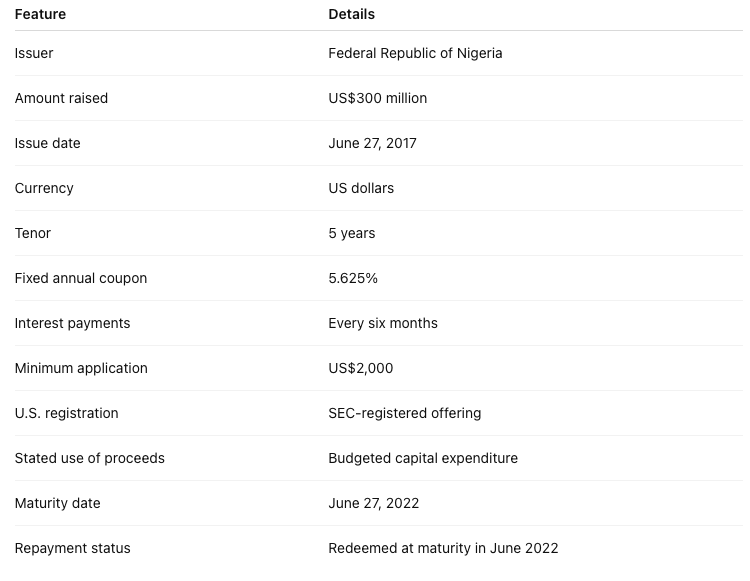
Sources: Nigeria’s final offering prospectus and the Debt Management Office’s redemption announcement.
How the Issuance Worked
Nigeria combined diaspora outreach with a formal securities offering. The transaction used a published prospectus, financial intermediaries, and international clearing and settlement arrangements. The documentation established payment terms, investor rights, and the risks associated with the bond.
DCI’s interpretation emphasizes the importance of this supporting infrastructure. Overseas connections provide a potential investor base. Participation also requires clear documentation, workable purchasing channels, and institutions responsible for administering the investment.
What the Financing Supported
The prospectus identified budgeted capital expenditure as the intended use of proceeds. In its subsequent redemption announcement, Nigeria’s Debt Management Office reported the proceeds partly financed the deficit under the 2017 Appropriation Act.
Assessing development impact requires evidence tracing allocations, spending, and results. Governments should publish information showing how financing contributes to public investment and national development priorities.
Lessons for Diaspora Bond Readiness
DCI draws four practical lessons from Nigeria’s experience.
Establish a Credible Legal Structure
Countries need institutions responsible for securities compliance, disclosure, investor communication, and transaction administration. Diaspora engagement policy should connect with the government’s debt management and regulatory systems.
Design for Investor Participation
Investment thresholds, documentation requirements, distribution channels, and customer support shape access. Governments should assess the needs of different diaspora groups before selecting an offering structure.
Plan for Repayment
Diaspora bonds create public debt obligations. Issuers need credible plans for interest payments, principal repayment, and foreign currency requirements throughout the borrowing period.
Connect Financing with Public Accountability
Clear reporting should explain the purpose of borrowing, the allocation of proceeds, and progress against intended outcomes. Ongoing communication gives investors a basis for evaluating government performance.
Relevance to DCI’s Diaspora Bond Readiness Index
DCI’s Diaspora Bond Readiness Index examines diaspora engagement policy, sovereign credit ratings, and remittances as a percentage of GDP. These indicators provide a starting point for assessing foundational financing conditions.
Nigeria’s issuance adds a practical transaction example to this framework. The case directs attention toward the institutions, participation channels, disclosure practices, and repayment arrangements countries need when moving from diaspora engagement to public borrowing.
Explore the Diaspora Bond Readiness Index:
https://diasporacountryindex.org/diaspora-bonds-readiness-index/
Disclaimer
This case study provides historical and educational information. The content does not provide investment, legal, tax or financial advice. Bond terms, sovereign risk and market conditions change over time. Readers should consult official offering documents and qualified advisers before making financial decisions.
_____
Sources and Further Reading
Federal Republic of Nigeria. Diaspora Bond Offering Prospectus, 2017.
Debt Management Office, Nigeria. FGN Redeems US$300 Million Diaspora Bond, 2022.