
Lessons for Diaspora Climate Readiness
Nepal offers lessons on connecting diaspora expertise, migrant remittances, and local institutions with climate action. This case study examines two areas: organized diaspora knowledge exchange and adaptation research involving migrant-sending households.
The Climate Challenge
Nepal faces floods, landslides, drought, and glacial lake outburst risks. These hazards threaten agriculture, water supplies, infrastructure, and livelihoods. Nepal’s National Adaptation Plan, covering 2021–2050, establishes priorities for strengthening resilience across sectors and levels of government.
For DCI, the central question concerns participation: how should countries connect overseas professionals and migrant communities with locally defined adaptation priorities?
Connecting Diaspora Expertise
The Non-Resident Nepali Association provides an organized channel for diaspora knowledge exchange.
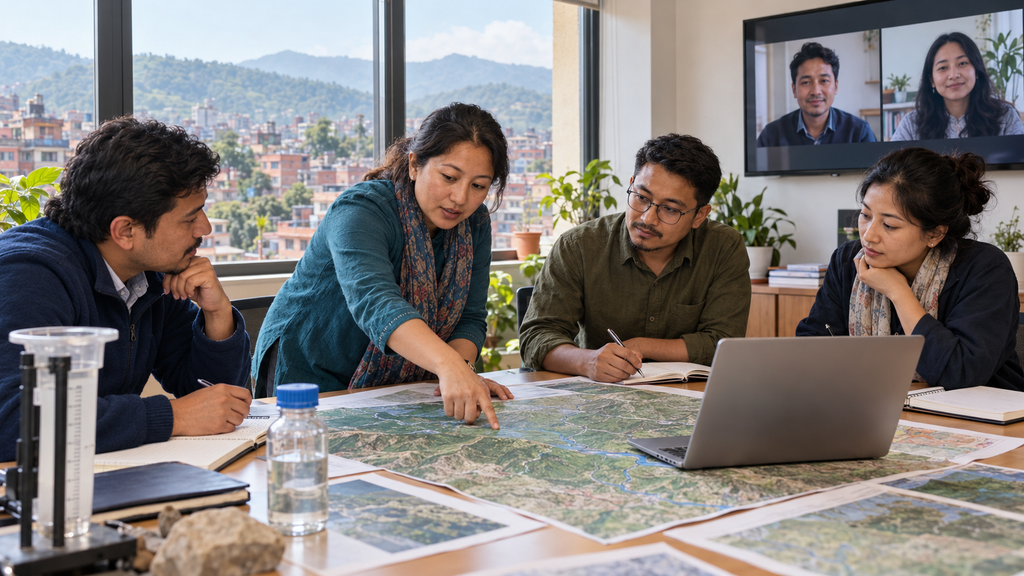
The program for its October 2023 Global Knowledge Convention included sustainable agriculture, renewable energy, environmental management, and disaster risk. The environmental symposium explicitly proposed collaboration between diaspora professionals, experts in Nepal, policymakers, and communities on climate adaptation and risk management.
DCI views this convening structure as a foundation for connecting expertise with national needs. Sustained collaboration requires defined projects, domestic institutional partners, funding, and documented results following the discussions.
Connecting Remittances with Local Preparedness
Research in Nepal’s Udayapur district provides a practical example of strengthening household adaptation capacity.
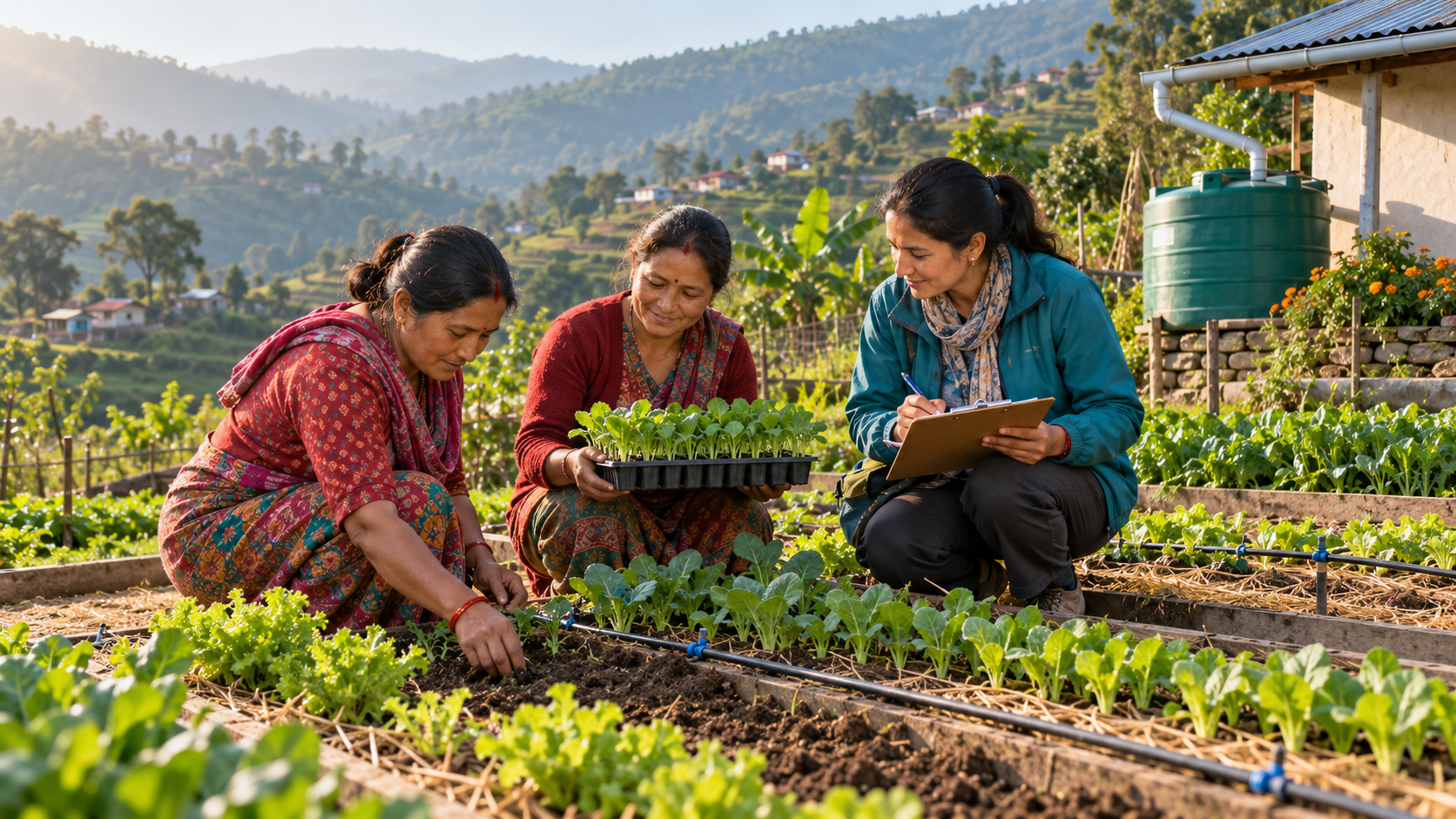
The International Centre for Integrated Mountain Development (ICIMOD) and the Nepal Institute of Development Studies worked with more than 200 women from migrant-sending households. Training covered financial literacy, flood preparedness, and livelihood diversification.
Activities included household budgeting, savings, emergency supplies, and growing short-duration vegetables around the monsoon season. Village coordinators provided continuing support through group meetings and household visits. The district’s migration patterns included employment elsewhere in Nepal and abroad.
A 2019 study reported participating households were more likely than comparison households to invest part of their precautionary savings in flood preparedness. The interventions also encouraged women to approach formal institutions. These findings concern household preparedness within the study, rather than national climate outcomes.
DCI’s interpretation is practical: linking migrant income with accessible training, local support, and household decision-making deserves attention in diaspora climate policy.
Readiness Priorities
Drawing on these examples, DCI identifies five priorities for governments and partners developing diaspora climate engagement.
Policy coordination
Define diaspora participation within adaptation planning. Assign specific roles to overseas specialists, diaspora organizations, local authorities, and research institutions.
Expertise networks
Organize diaspora professionals around defined needs, including flood forecasting, water management, resilient agriculture, renewable energy, and climate finance. Record relevant expertise, availability, and completed contributions.
Institutional responsibility
Designate a government lead for coordinating diaspora participation with climate agencies and municipalities. Give participants clear procedures, contact points, and project responsibilities.
Research partnerships
Connect diaspora researchers with domestic universities and technical institutions through joint studies, mentoring, training, and locally requested technical assignments. Document implementation and outputs.
Community delivery
Design initiatives with affected communities. Establish budgets, maintenance responsibilities, participation safeguards, and measures of progress. Track practical results, including household preparedness, functioning warning systems, and continuity of essential services.
Lessons for Other Countries
Nepal’s experience supports a research agenda connecting diaspora knowledge with local adaptation capacity.
Governments should start with a defined climate problem and a domestic institution responsible for delivery. Diaspora partners should contribute through agreed assignments, while communities shape priorities and assess usefulness.
Remittances belong to households. Participation in collective climate initiatives should remain voluntary and respect family needs. Public institutions and development partners should retain responsibility for financing public adaptation services.
Connection to DCRI
This case study informs the Diaspora Climate Readiness Index’s examination of policies, institutions, expertise networks, research partnerships, and implemented initiatives.
Explore DCI’s Climate Work
Explore the Diaspora Climate Readiness Index
Sources and Further Reading
ICIMOD (updated 2020). Building women’s capacities to leverage remittances. Documents financial literacy, flood preparedness, livelihood training, and village-level support in Udayapur.
Government of Nepal (2021). National Adaptation Plan 2021–2050. Download the full plan.
Non-Resident Nepali Association (2023). Third NRN Global Knowledge Convention: Program. Sessions cover sustainable agriculture, renewable energy, environmental management, and disaster risk.
Non-Resident Nepali Association (2023). Sustainable Environment, Disaster and Risk Management Symposium. Describes proposed collaboration among diaspora professionals, experts in Nepal, policymakers, and communities.
Banerjee, S., Hussain, A., Tuladhar, S., and Mishra, A. (2019). Building capacities of women for climate change adaptation: Insights from migrant-sending households in Nepal. Climatic Change, 157, 587–609.