


India’s Pharmaceutical and Biotech Transformation: Lessons for Diaspora Technology Transfer Readiness
How does a country turn a globally distributed community of scientists, researchers, physicians, executives, and entrepreneurs into an asset for domestic technological transformation?
India’s pharmaceutical and biotechnology experience provides an important answer.
Over several decades, Indian scientists and technology professionals built careers inside universities, pharmaceutical companies, biotechnology firms, research laboratories, hospitals, and innovation clusters across the United States, United Kingdom, Europe, and other major scientific centers.
As India’s own pharmaceutical and biotechnology industries expanded, this globally dispersed talent became increasingly valuable.
Overseas Indian scientists brought advanced research experience, specialized technical knowledge, understanding of international regulatory systems, management practices, entrepreneurial experience, and connections to global scientific and commercial networks.
Research on India’s pharmaceutical industry has found that the return of scientists trained in the United States and Europe contributed to technological upgrading within knowledge-intensive Indian pharmaceutical companies. Wiley Online Library
The strategic lesson extends well beyond India.
A skilled diaspora is not simply a population living overseas. Under the right conditions, it can become part of a country’s extended scientific, technological, and innovation infrastructure.
From Global Talent to National Capability
For decades, large numbers of Indian scientists, physicians, engineers, and researchers pursued advanced education and professional opportunities abroad.
Traditionally, this movement was described as “brain drain.”
India’s pharmaceutical and biotechnology experience demonstrates another possibility.
Skills acquired abroad can return through people.
Knowledge can return through collaboration.
Networks can connect domestic companies with international research centers.
Diaspora entrepreneurs can connect markets and capital.
Scientists who remain abroad can participate in joint research, mentoring, advisory roles, investment, clinical collaborations, and technology partnerships.
The result is a different development model:
Brain drain → Global expertise → Brain circulation → Knowledge transfer → Domestic capability → Innovation
For DCI, this progression is at the heart of diaspora technology transfer readiness.
India’s Pharmaceutical Scale Creates a Platform for Knowledge Transfer
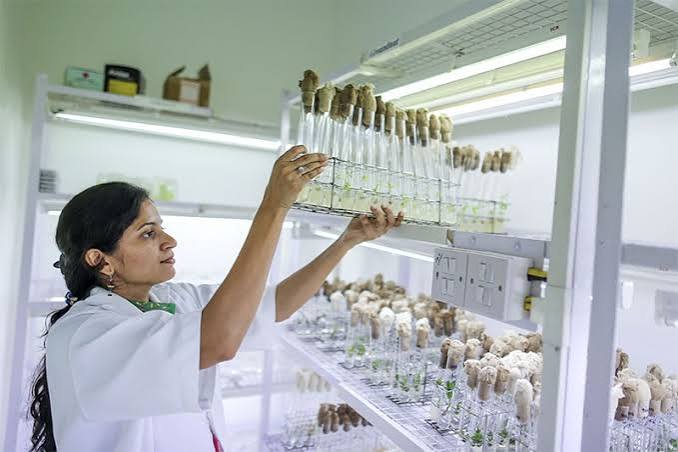
India has built one of the world’s largest pharmaceutical manufacturing systems.
In FY2024–25, India ranked third globally in pharmaceutical production by volume and eleventh by value. The industry recorded approximately ₹4.72 lakh crore in annual turnover and exported pharmaceuticals to 191 countries. India supplies roughly 20 percent of global generic medicine demand. Press Information Bureau
India also has more than 3,000 pharmaceutical companies and approximately 10,500 manufacturing units. Press Information Bureau
This scale matters for diaspora engagement.
A scientist abroad becomes more strategically valuable when there are domestic companies capable of hiring them.
A researcher becomes more valuable when laboratories exist to support their work.
A pharmaceutical executive becomes more valuable when companies are trying to enter international markets.
A biotech entrepreneur becomes more valuable when financing, incubators, technology-transfer offices, universities, and commercialization partners exist.
India’s domestic industrial base therefore created a platform through which globally acquired expertise could increasingly be converted into local capability.
The Scientific Diaspora as a Technology-Transfer Channel
One of the strongest pieces of evidence comes from research into innovative Indian pharmaceutical companies.
A 2009 study by Dinar Kale examined four Indian pharmaceutical firms and found that the “reverse brain drain” of scientists and engineers trained in the United States and Europe could accelerate technological upgrading in emerging-market firms. Wiley Online Library
This is particularly significant because advanced pharmaceutical knowledge is difficult to transfer solely through manuals, equipment purchases, or licensing agreements.
Much of it is embedded in experience.
Scientists working inside leading global pharmaceutical companies learn how research organizations operate.
They learn how drug-development programs are managed.
They understand laboratory systems, clinical-development processes, intellectual-property strategy, regulatory requirements, and international quality standards.
When these professionals reconnect with domestic firms, they transfer more than technical information.
They bring what economists often describe as tacit knowledge: knowledge accumulated through practice, experience, and participation in sophisticated organizations.
That makes skilled diaspora professionals potential carriers of capabilities that are difficult to purchase on international markets.
Moving Up the Pharmaceutical Value Chain
Diaspora expertise becomes particularly important when an industry is trying to move into more sophisticated activities.
Producing established generic medicines requires substantial manufacturing, chemistry, regulatory, and quality-control expertise.
Developing biologics, biosimilars, new therapies, diagnostics, advanced vaccines, and other biotechnology products requires additional layers of research and innovation.
India’s pharmaceutical firms therefore faced a different challenge as they sought to move from manufacturing strength toward more research-intensive activities.
Overseas-trained scientists represented one mechanism for bridging that knowledge gap.
This helps explain why India’s diaspora story is not simply about reversing migration.
It is about industrial upgrading.
The strategic value of the diaspora grows as the sophistication of the domestic economy grows.
Turning Brain Drain into Brain Circulation
Permanent return is only one model.
Recent research on Indian scientists and engineers working in biotechnology and technology found that both professionals who returned to India and those who remained in the United States maintained transnational professional relationships connecting the two countries. Sage Journals
This distinction is critical.
India does not need every Indian scientist working in Boston, San Francisco, London, Cambridge, Singapore, or another global innovation hub to relocate permanently.
Professionals remaining overseas can still contribute through:
Joint research and scientific collaborations
Visiting appointments
Mentoring and training
Clinical partnerships
Technology licensing
Scientific advisory boards
Startup investment
Venture-capital relationships
University partnerships
Company-to-company partnerships
Professional networks
Regulatory expertise
Market access
Short-term technical assignments
The objective shifts from bringing everyone home to building mechanisms that allow expertise to circulate continuously.
Institutionalizing the Scientific Diaspora
India has increasingly translated this idea into formal public policy.
The Department of Biotechnology created the Ramalingaswami Re-entry Fellowship specifically to attract highly skilled Indian researchers working overseas in biotechnology, life sciences, bioengineering, healthcare, agriculture, bioenergy, and related disciplines.
The program provides scientists with a pathway to conduct research in Indian universities and scientific institutions. DBT India
Under the program guidelines, up to 75 fellowships can be awarded annually. DBT India
An earlier government review found that during the program’s first decade, 1,492 applications were received, 396 fellowships were offered, and 295 researchers took positions in Indian laboratories. Approximately 200 subsequently secured permanent faculty positions. North Eastern Development Ministry
These numbers demonstrate something strategically important.
India did not rely exclusively on informal patriotism or appeals to skilled nationals living abroad.
It built an institutional pathway.
Beyond Return: Engaging Scientists Who Remain Overseas
India is also developing models that do not depend on permanent return.
In December 2025, India’s Ministry of Science and Technology highlighted several programs designed to connect Indian-origin researchers abroad with domestic research institutions.
These include the VAIBHAV Fellowship Programme, which specifically supports Indian diaspora researchers undertaking collaborative research with Indian institutions, alongside Department of Biotechnology programs supporting overseas Indian researchers returning to India. Press Information Bureau
This represents an important evolution in diaspora policy.
The model becomes:
Return when appropriate.
Collaborate when return is unnecessary.
Maintain scientific networks regardless of location.
That approach allows a country to benefit from professionals embedded within the world’s strongest research ecosystems without requiring them to abandon those ecosystems.
The Diaspora as an Extension of India’s Innovation System
This leads to a larger strategic idea.
India’s biotechnology diaspora can be viewed as an external layer of the country’s national innovation system.
Indian researchers abroad are embedded within global centers of excellence in:
Drug discovery
Genomics
Precision medicine
Biologics
Vaccines
Artificial intelligence for drug development
Medical devices
Clinical research
Computational biology
Advanced manufacturing
Cancer research
Regulatory science
Venture capital
Biotechnology entrepreneurship
Their value to India is not restricted to what they personally invent.
Their networks provide access to knowledge about where technologies are moving, which research areas are emerging, how firms are financing innovation, where new regulatory approaches are developing, and which technologies are approaching commercialization.
Diaspora networks therefore have strategic intelligence value as well as scientific value.
Biotechnology Raises the Importance of the Diaspora
This becomes even more important as India moves deeper into biotechnology and biopharmaceutical innovation.
Biotechnology is highly specialized and globally networked.
No country possesses all of the expertise required for drug discovery, biologics manufacturing, advanced therapies, genomics, clinical development, artificial intelligence, regulatory approval, commercialization, and venture financing.
Access to international knowledge networks becomes a competitive advantage.
McKinsey’s 2026 assessment of Asian biopharma specifically identifies returnee talent and biotech entrepreneurs as part of India’s evolving innovation environment, alongside expanding capital access and government R&D incentives. McKinsey & Company
India’s diaspora is therefore increasingly relevant not simply as a source of labor.
It is a source of connectivity to the global biotechnology frontier.
Building Domestic Institutions That Multiply Diaspora Expertise
Diaspora expertise produces greater impact when domestic institutions can convert knowledge into products.
India has therefore invested in technology-transfer and commercialization infrastructure.
Under the National Biopharma Mission, BIRAC supports a network of seven Regional Technology Transfer Offices.
These offices connect academic institutions with industry, support technology acquisition and adaptation, develop intellectual-property capabilities, and help move research toward commercialization. BIRAC
This matters enormously for diaspora engagement.
Consider two scenarios.
In the first, an Indian biotechnology researcher abroad gives a presentation at a diaspora conference.
In the second, that same scientist collaborates with an Indian laboratory, works with a domestic company, accesses a technology-transfer office, receives commercialization support, mentors a startup, and connects the team with international investors.
Both count as diaspora engagement.
Only the second is structured for technology transfer.
That difference is diaspora readiness.
The Diaspora as a Bridge Between Research and Commercialization
One of the hardest challenges in biotechnology is moving from scientific discovery to commercial product.
The journey includes:
Research
Intellectual property
Preclinical development
Clinical trials
Regulatory approval
Manufacturing
Financing
Market access
Scale
Indian diaspora professionals often work across precisely these parts of the international pharmaceutical and biotechnology ecosystem.
A globally distributed professional network therefore gives India access not simply to scientists, but potentially to an entire chain of specialized expertise.
A researcher working in Boston might provide scientific collaboration.
A regulatory professional in Washington might contribute knowledge of approval pathways.
A manufacturing specialist working for a multinational pharmaceutical company might support process development.
A biotechnology investor in California might connect an Indian startup to capital.
An Indian-origin pharmaceutical executive in Europe might help a domestic company navigate international partnerships.
The diaspora becomes more valuable when policymakers stop viewing it as a single community and begin mapping it as a distributed value chain of expertise.
Creating a National Map of Global Expertise
This suggests an important next step for countries seeking to reproduce elements of India’s experience.
Knowing how many scientists live abroad is insufficient.
Governments and institutions need to understand:
What technologies do they know?
Where do they work?
What stage of the innovation process do they understand?
Which international networks do they belong to?
What domestic institutions match their expertise?
What form of engagement are they willing to undertake?
The resulting map might identify:
Drug-discovery scientists
Clinical-trial specialists
Biomanufacturing engineers
Regulatory experts
IP lawyers
University researchers
Venture investors
Biotech entrepreneurs
Pharmaceutical executives
Medical-device specialists
AI and computational-biology researchers
This transforms diaspora mapping from demographic information into economic intelligence.
From Global Scientific Networks to Domestic Economic Transformation
India’s experience demonstrates a potential development chain:
Indian talent enters global scientific ecosystems
↓
Professionals accumulate advanced knowledge and networks
↓
Returnees and diaspora networks reconnect with India
↓
Domestic firms and research institutions absorb expertise
↓
Research and management capabilities deepen
↓
Companies enter higher-value activities
↓
Technology is commercialized and manufactured
↓
Domestic capabilities become globally competitive
This is technology transfer as economic transformation.
The diaspora is not peripheral to this process.
It represents one mechanism through which knowledge accumulated at the global technological frontier becomes accessible to domestic institutions.
From Domestic Capability to Global Health Impact
The benefits also extend beyond India.
India supplies approximately one-fifth of global generic medicines and exports pharmaceuticals to 191 countries. Press Information Bureau
India is also a major global supplier of affordable vaccines. Press Information Bureau
This creates an important connection between diaspora technology transfer, industrial policy, and global development.
Scientific knowledge acquired internationally can strengthen domestic companies.
Domestic companies can expand production and innovation.
Increased capability can lower the cost and expand the availability of medicines and health technologies internationally.
The development pathway therefore becomes:
Diaspora expertise → Technology transfer → Domestic capability → Industrial scale → Global health impact
Lessons for Diaspora Technology Transfer Readiness
India’s pharmaceutical and biotechnology experience closely aligns with the six dimensions of DCI’s Diaspora Technology Transfer Readiness approach.
1. National Ownership
India established public programs, research initiatives, biotechnology institutions, financing mechanisms, and policies designed to expand domestic pharmaceutical and biotechnology capabilities.
2. Diaspora Technology Talent
India possesses a globally distributed community of scientists, researchers, physicians, pharmaceutical executives, entrepreneurs, investors, and biotechnology professionals.
Research demonstrates that overseas-trained scientists contributed to technological upgrading within Indian pharmaceutical companies. Wiley Online Library
3. Domestic Absorptive Capacity
India’s pharmaceutical companies, biotechnology firms, manufacturing facilities, universities, research institutes, laboratories, hospitals, startups, and scientific workforce provide multiple environments in which internationally acquired expertise can be used.
4. Collaboration Pathways
The Ramalingaswami Re-entry Fellowship, VAIBHAV Fellowship, company recruitment, research partnerships, professional networks, visiting appointments, and scientific collaborations provide different mechanisms for connecting globally distributed Indian expertise with domestic institutions. DBT India
5. Finance, Intellectual Property and Commercialization
BIRAC, the National Biopharma Mission, technology-transfer offices, incubators, investors, pharmaceutical companies, and commercialization infrastructure support the conversion of research into products and companies. BIRAC
6. Verified Delivery and Retention
India’s pharmaceutical manufacturing scale, global generics supply, biotechnology firms, scientific institutions, international exports, and growing R&D capabilities demonstrate that substantial knowledge and productive capability have become embedded within the domestic economy.
The Strategic Lesson for Developing Economies
India’s experience suggests that developing countries should stop thinking of skilled citizens abroad primarily as people who have left.
They are also potential nodes in a global national network.
The objective is not necessarily to reverse migration.
The objective is to create circulation.
That requires countries to build institutions that allow professionals abroad to move knowledge, technology, research practices, capital, business relationships, and market intelligence into the domestic economy.
A sophisticated diaspora technology strategy therefore asks:
Where is our global talent?
What does it know?
What domestic industries need that knowledge?
What institutions connect the two?
How does collaboration become commercialization?
How does transferred knowledge remain inside the economy?
How do we measure whether domestic capability improves?
The DCI Perspective
India’s pharmaceutical and biotechnology experience provides a powerful example of why diaspora expertise should be treated as a strategic economic asset.
Indian scientists abroad gained access to some of the world’s most sophisticated pharmaceutical companies, research universities, biotechnology clusters, hospitals, laboratories, investment networks, and innovation ecosystems.
Returnees carried valuable knowledge into Indian companies and research institutions.
Professionals who remained overseas continued to maintain transnational scientific and professional relationships.
Government programs created structured pathways for return and collaboration.
Domestic pharmaceutical and biotechnology institutions increasingly provided the absorptive capacity required to transform global knowledge into local capability.
The strategic objective is therefore larger than “engaging the diaspora.”
It is building an institutional system through which a country’s globally distributed human capital becomes part of its national innovation infrastructure.
That is the shift from diaspora engagement to diaspora technology transfer readiness.
The central question is no longer simply:
How many scientists does India have abroad?
It becomes:
How effectively can India connect its global scientific diaspora to domestic firms, researchers, entrepreneurs, investors, and institutions in order to accelerate the next generation of biotechnology and pharmaceutical innovation?
Sources and References
Dinar Kale, “International Migration, Knowledge Diffusion and Innovation Capacities in the Indian Pharmaceutical Industry,” New Technology, Work and Employment, 2009. Examines how reverse migration of internationally trained scientists contributed to technological upgrading in Indian pharmaceutical companies. Wiley Online Library
Wiley article
Government of India, Department of Biotechnology and Regional Centre for Biotechnology, Ramalingaswami Re-entry Fellowship. The program is designed to attract highly skilled Indian researchers working overseas in biotechnology, life sciences, bioengineering, healthcare, and related disciplines to pursue research in Indian universities and scientific institutions. The program is managed by the DBT-HRD Project & Management Unit at the Regional Centre for Biotechnology. Regional Centre for Biotechnology
Government of India, Department of Biotechnology, Ramalingaswami Fellowship review. Reports that 1,492 applications were received during the program’s first decade, 396 fellowships were offered, 295 scientists took positions in Indian laboratories, and approximately 200 subsequently secured permanent faculty positions. North Eastern Development Ministry
DBT fellowship review
Government of India, Ministry of Science and Technology, December 17, 2025. Describes programs including VAIBHAV and Ramalingaswami designed to connect Indian-origin researchers abroad with Indian institutions. Press Information Bureau
Government of India diaspora scientist programs
Roli Varma, “Why Stay, Why Return: Mobility Choices of Indian Scientists and Engineers,” Asian and Pacific Migration Journal, 2026. Finds that both returnees and Indian scientists remaining in the United States maintain transnational professional relationships connecting scientific communities across borders. Sage Journals
SAGE article
Government of India, Press Information Bureau, pharmaceutical industry data for FY2024–25. Reports India’s position as the world’s third-largest pharmaceutical industry by volume, approximately 20 percent of global generic supply, ₹4.72 lakh crore in annual turnover, and pharmaceutical exports to 191 countries. Press Information Bureau
Government of India pharmaceutical industry factsheet
Biotechnology Industry Research Assistance Council, Regional Technology Transfer Office Network. Documents seven regional technology-transfer offices connecting research institutions, intellectual property, industry, and commercialization. BIRAC
BIRAC Regional Technology Transfer Office network
McKinsey & Company, “The Emerging Epicenter: Asia’s Role in Biopharma’s Future,” 2026. Identifies returnee talent and biotech entrepreneurs among the factors supporting India’s evolving biopharma innovation environment. McKinsey & Company
McKinsey biopharma analysis
This framing is much stronger for DCI because the diaspora is no longer presented as an interesting supporting factor. It is presented as a strategic layer of India’s innovation system: a distributed reservoir of scientific knowledge, management capability, international networks, capital connections, and technological intelligence that India has increasingly built pathways to connect with its domestic economy.