
Morocco’s Automotive Transformation: Lessons for Diaspora Technology Transfer Readiness
How did Morocco develop one of Africa’s most significant automotive manufacturing ecosystems, and what does its experience tell us about diaspora-enabled technology transfer?
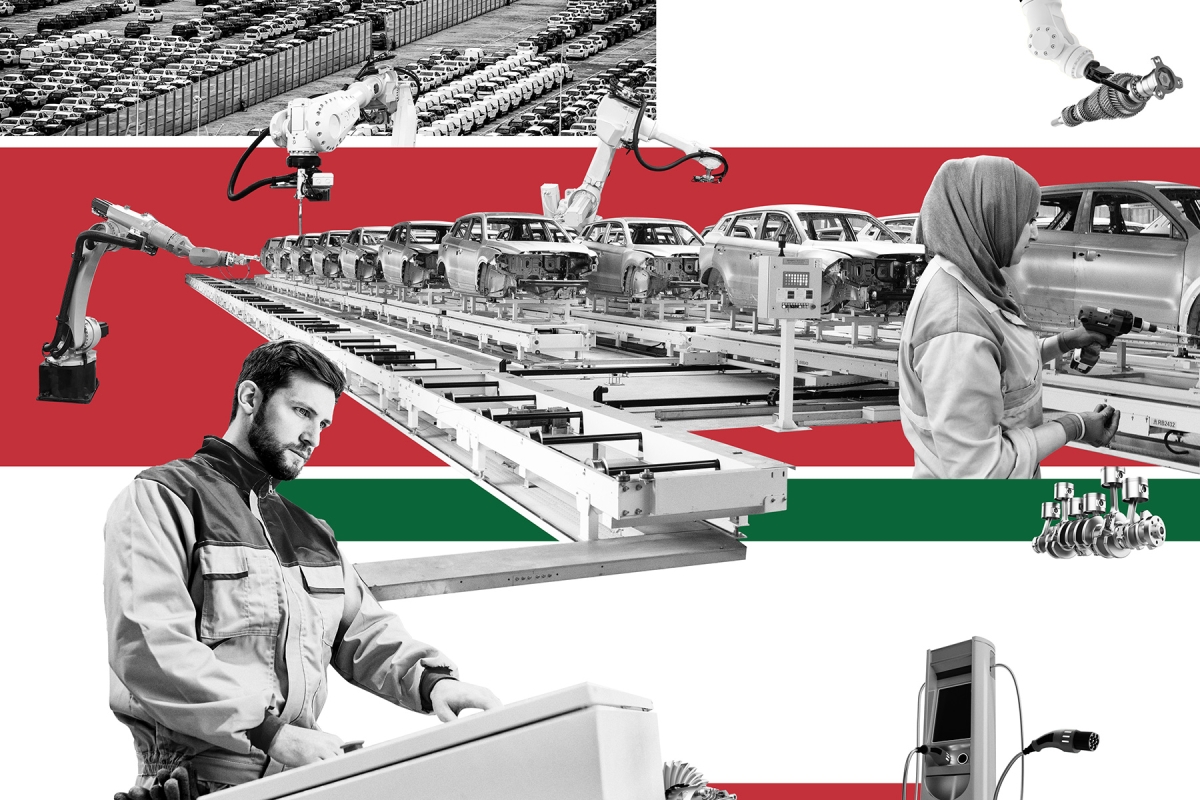
Morocco’s automotive transformation has been built through industrial policy, foreign investment, supplier development, workforce training, infrastructure, and partnerships with global manufacturers.
The Moroccan diaspora adds another strategic asset. Engineers, managers, researchers, and industry professionals working abroad can contribute technical expertise, global networks, supplier knowledge, and experience with advanced manufacturing.
For DCI, the key question is:
How can Morocco connect its global automotive talent more systematically with domestic manufacturers, suppliers, universities, and training institutions to deepen technology transfer and move further up the value chain?
Building an Automotive Ecosystem
Morocco has treated automotive manufacturing as a strategic industrial sector since the 2000s.
Under the Industrial Acceleration Plan 2014–2020, the government developed an ecosystem approach designed to deepen local integration and strengthen relationships among manufacturers, suppliers, training institutions, and supporting industries.
The Ministry of Industry and Trade identifies automotive ecosystems covering wiring, vehicle interiors and seats, metal stamping, batteries, heavy vehicles and industrial bodywork, engines and transmissions, and manufacturer ecosystems associated with Renault and PSA, now part of Stellantis. Ministry of Industry
This matters from a technology-transfer perspective.
Technology transfer becomes more durable when knowledge flows into an ecosystem rather than a single factory.
From Assembly to Industrial Capability
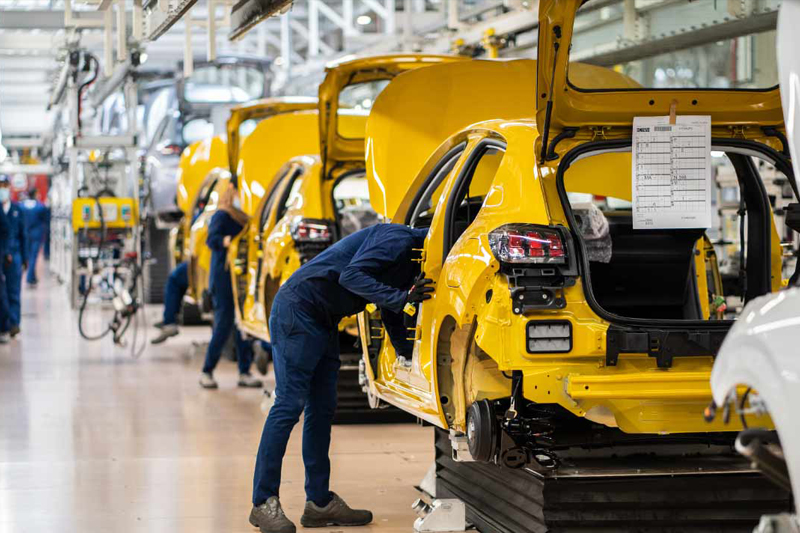
Morocco’s automotive sector has progressively moved into more sophisticated production activities.
The government’s automotive strategy has supported financing, industrial land, training, supplier development, and technical infrastructure. The Ministry of Industry and Trade specifically identifies the development of engines and transmissions as evidence of Morocco’s technological upgrading. Ministry of Industry
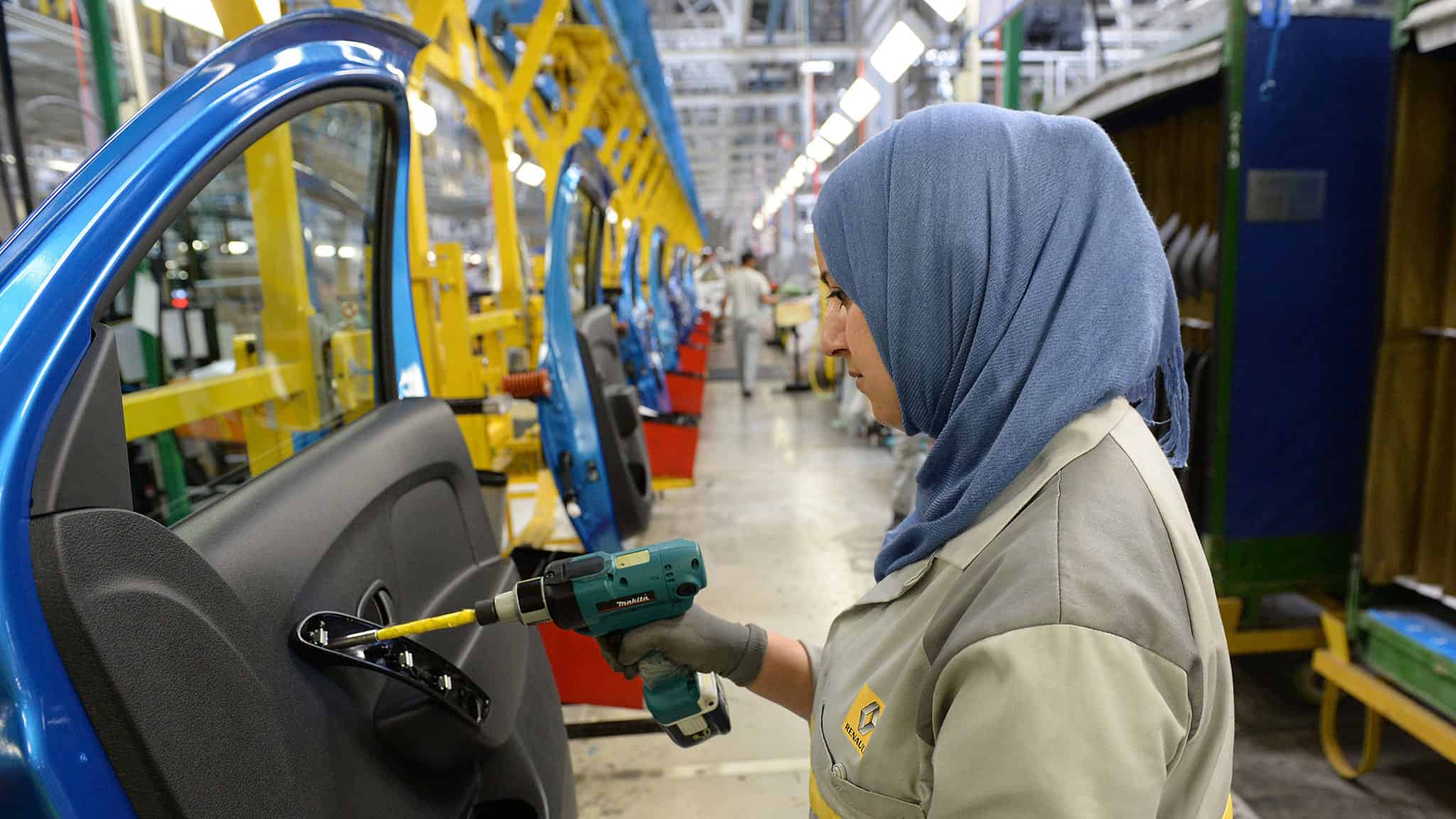
Renault’s Tangier plant illustrates this progression.
The plant was inaugurated in February 2012 and now includes body assembly, logistics, chassis, and subassembly operations. In 2024, the site began producing the Dacia Jogger Hybrid 140, the first hybrid vehicle assembled at the Tangier facility. Renault says introducing hybrid production required additional qualifications and new technical processes for employees. Renault Group
This is an important readiness lesson.
Technology transfer is not simply the arrival of foreign machinery.
It requires workers, engineers, suppliers, institutions, and production systems capable of operating increasingly sophisticated technologies.
The Growth of the Automotive Sector
By 2024, automotive exports had reached approximately 157.6 billion Moroccan dirhams, an increase of 6.3 percent from the previous year. Automotive remained Morocco’s leading export sector. Maroc
The Ministry of Industry and Trade’s 2025 national industrial survey reported that the automotive sector generated nearly 196 billion dirhams in turnover during 2024 and supported more than 250,000 direct jobs. Ministry of Industry
These figures demonstrate the scale of the domestic industrial base into which new technical knowledge, engineering capability, and global professional expertise might flow.
Renault, Stellantis and Deeper Local Capability
Global manufacturers have played an important role in Morocco’s industrial development.
Renault’s Tangier facility employed more than 6,000 people by June 2026 and operates alongside a wider supplier and training ecosystem. Renault Group
Stellantis opened its Kenitra plant in 2019. In November 2022, the company announced more than €300 million in additional investment to double production capacity and introduce a new vehicle platform. Stellantis.com
By 2025, Stellantis reported that its Moroccan engineering ecosystem included more than 4,000 engineers and senior technicians, directly and indirectly, through its Automotive Technical Center and associated activities. The company also announced plans to increase local sourcing and deepen local integration. Stellantis Media
For DCI, this is important because technology transfer becomes more meaningful when countries develop engineering capability alongside manufacturing capacity.
Skills and Domestic Absorptive Capacity
Morocco also invested in specialized automotive training.
The government established Automotive Industry Training Institutes, IFMIA, in locations including Casablanca, Kenitra, and Tangier.
These institutes provide initial, pre-employment, and continuing training linked to the needs of automotive companies. The government describes workforce training as a strategic component of the Industrial Acceleration Plan and explicitly links workforce quality with productivity, competitiveness, and investment attraction. Ministry of Industry
In 2019, the Moroccan government, industry association AMICA, PSA Morocco, and Renault Morocco signed additional agreements aimed at aligning automotive skills development with industry demand. Ministry of Industry
This is a central DTRI principle:
External expertise creates greater value when domestic institutions are capable of receiving and applying it.
The Diaspora Opportunity
Morocco adds another important layer: a large pool of highly skilled professionals abroad.
The government’s Department of Moroccans Residing Abroad reports that more than 400,000 Moroccans abroad hold qualifications at Bac+5 level or higher.
Its competency-mobilization strategy explicitly identifies professionals working in sectors including automotive, information technology, research, higher education, and other technical fields. MRE
The government has also developed geographic and thematic professional networks designed to connect Moroccan expertise abroad with domestic institutions through knowledge exchange, applied research, specialized training, technical assistance, and partnerships. MRE
This creates a significant readiness opportunity.
Morocco already has:
A growing automotive manufacturing base.
Global manufacturers.
Domestic suppliers.
Technical training institutions.
Engineering capability.
Universities and research institutions.
Industrial policy.
A highly skilled diaspora.
The strategic question is how systematically these assets are connected.
From Diaspora Talent to Industrial Capability
Diaspora professionals working in automotive, advanced manufacturing, engineering, software, batteries, electronics, mobility, materials, and supply chains represent a potential source of knowledge.
Their contribution might include:
Supplier upgrading.
Engineering mentorship.
Specialized technical training.
University-industry collaboration.
Quality and certification support.
Research partnerships.
Advanced manufacturing processes.
Management and production systems.
International market connections.
Entrepreneurship.
Technology commercialization.
Short-term technical assignments.
The objective does not require every Moroccan engineer abroad to return permanently.
The stronger model allows expertise to circulate between global industry and Morocco’s domestic industrial ecosystem.
Lessons for Diaspora Technology Transfer Readiness
Morocco’s automotive transformation highlights six conditions aligned with DCI’s Diaspora Technology Transfer Readiness approach.
1. National Ownership
Morocco has treated automotive manufacturing as a strategic industrial priority and developed policies, industrial zones, financing support, training programs, and sector-specific ecosystems around that objective. Ministry of Industry
2. Diaspora Technology Talent
Morocco has a substantial pool of highly qualified professionals abroad, including professionals working in the automotive sector, and has established programs intended to mobilize their expertise. MRE
3. Domestic Absorptive Capacity
Automotive manufacturers, suppliers, training institutes, engineers, industrial zones, and technical centers give Morocco a growing ability to receive and apply external technical knowledge. Renault Group
4. Collaboration Pathways
Morocco’s diaspora competency programs seek to connect professionals abroad with institutional, economic, academic, and civil-society partners through research, specialized training, technical assistance, and other collaborations. MRE
5. Finance, Commercialization and Industrial Integration
Industrial policy has linked investment attraction with supplier development, training, industrial land, financing, and local integration. This helps knowledge move beyond individual projects into broader economic activity. Ministry of Industry
6. Verified Delivery and Retention
Morocco’s growing automotive employment, export base, local engineering capability, supplier activity, and increasingly sophisticated production provide evidence that industrial knowledge is being retained and expanded domestically. Ministry of Industry
The Missing Bridge
Morocco’s experience also reveals an important research question.
There is strong evidence of automotive industrial capability.
There is strong evidence of government mechanisms designed to mobilize skilled Moroccans abroad.
What requires deeper investigation is the extent to which these two systems are systematically connected.
For example:
Are Moroccan automotive engineers abroad mapped by specialization?
Are global Moroccan professionals participating in supplier-upgrading programs?
Are diaspora engineers connected with IFMIA training institutions?
Are universities systematically partnering with Moroccan automotive researchers abroad?
Are short-term technical assignments available?
Are Moroccan professionals employed by major OEMs and Tier 1 suppliers connected to domestic firms?
Are the outcomes of these collaborations measured?
These are diaspora readiness questions.
The Readiness Lesson for Developing Economies
Morocco’s automotive experience shows that attracting foreign investment alone does not create technological capability.
Countries also need institutions that help technology become embedded domestically.
This includes:
Skilled workers.
Engineers.
Suppliers.
Research institutions.
Training systems.
Industrial infrastructure.
Commercialization pathways.
Government coordination.
International networks.
Once these foundations exist, diaspora professionals have more meaningful opportunities to contribute.
The lesson for other developing economies is therefore not simply:
“Bring skilled people home.”
The stronger lesson is:
Build an ecosystem worth connecting them to.
From Engagement to Technology Transfer
Many governments engage their diasporas through conferences, investment forums, professional associations, and outreach programs.
These activities help establish relationships.
Technology transfer requires another step.
Governments need systems capable of matching specific domestic needs with specific diaspora capabilities.
For example:
A local automotive supplier needs advanced quality-control expertise.
A Moroccan engineer abroad has experience managing production systems for a global Tier 1 supplier.
Diaspora engagement introduces them.
Diaspora readiness creates the institutional pathway that allows the relationship to produce measurable capability.
That distinction is central to DCI’s approach.
The DCI Perspective
Morocco’s automotive transformation provides an important African example of the conditions required for sustained industrial upgrading.
The case demonstrates the importance of national strategy, foreign investment, supplier development, workforce training, engineering capacity, and domestic institutions.
Morocco also possesses a substantial pool of technical talent abroad and has begun developing mechanisms designed to mobilize that expertise.
The opportunity is connecting these systems more deliberately.
DCI’s Diaspora Technology Transfer Readiness Index examines whether countries possess the enabling conditions required to translate diaspora expertise and global professional networks into sustained domestic capability.
The central question is not simply:
Does Morocco have automotive professionals abroad?
The stronger question is:
Is the institutional bridge strong enough to turn their global experience into deeper domestic technological capability?
Sources and References
Morocco Ministry of Industry and Trade, Automotive Sector
https://mcinet.gov.ma/en/content/industry-0/automotive-0
Morocco Ministry of Industry and Trade, National Industry Barometer
https://mcinet.gov.ma/fr/actualites/barometre-de-lindustrie-nationale-lindustrie-marocaine-franchit-un-nouveau-cap-en-2024
Moroc.ma, Automotive Export Data
https://maroc.ma/fr/actualites/maroc-lautomobile-maintient-sa-position-de-1er-secteur-exportateur-en-2024
Renault Group, Tangier Plant
https://www.renaultgroup.com/en/group/locations/tangier-plant/
Stellantis, Kenitra Investment Announcement
https://www.stellantis.com/en/news/press-releases/2022/november/a-new-step-for-kenitra-site-to-support-growth-plans-for-middle-east-and-africa-region
Stellantis Media, Kenitra Expansion
https://www.media.stellantis.com/me-fr/corporate/press/maroc-stellantis-et-le-gouvernement-marocain-consolident-leur-partenariat-industriel-a-kenitra-inauguration-de-l-extension-de-l-usine-de-kenitra-et-lancement-de-nouveaux-projets
Department of Moroccans Residing Abroad, Competencies Mobilization Program
https://mre.gov.ma/fr/mobilisation-des-competences-des-marocains-residant-letranger-mre
Department of Moroccans Residing Abroad, Competencies Mobilization and Project Support
https://mre.gov.ma/en/competencies-mobilization-and-projects-holders-support