
Lessons for the Diaspora Climate Readiness Index (DCRI)
Somalia’s climate challenge is closely tied to livelihoods. Repeated droughts and floods threaten livestock, farming, water supplies, and household income. Conflict and weak institutions compound these pressures.
Somali diaspora engagement offers lessons for connecting household support and enterprise with local resilience. DCI examines the policies, institutions, and partnerships needed to link diaspora contributions with community priorities and measurable adaptation outcomes.
What the Evidence Shows
CGIAR research published in 2026, drawing on February 2025 interviews in Mudug, describes diaspora contributions through household support and livelihood innovation.
Remittances supported basic needs during drought and displacement. Diaspora returnees also introduced camel-milk production and distribution arrangements closer to urban markets. Local pastoralist groups adopted related practices, pooling lactating camels and sharing collection and delivery responsibilities.
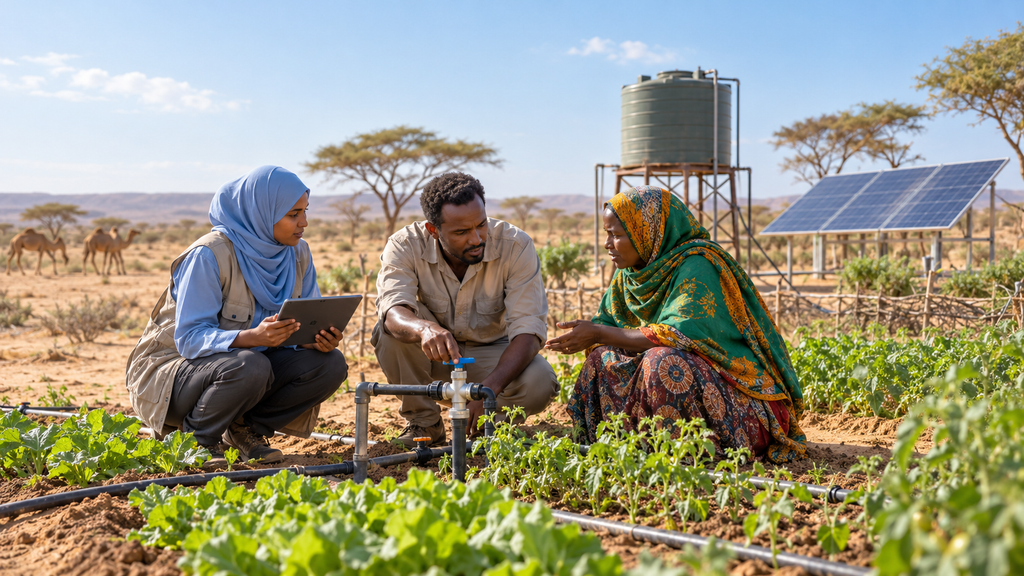
Researchers further reported diaspora returnees demonstrating crop production in parts of Mudug, where farming had previously been limited. These findings describe local experiences. They do not establish nationwide impacts or independently verify long-term reductions in climate vulnerability.
DCI interprets these examples as starting points for assessing readiness. Stronger sales alone do not demonstrate adaptation. Assessment should examine exposure to drought, water use, asset losses, and income stability.
Connecting Expertise with Local Adaptation
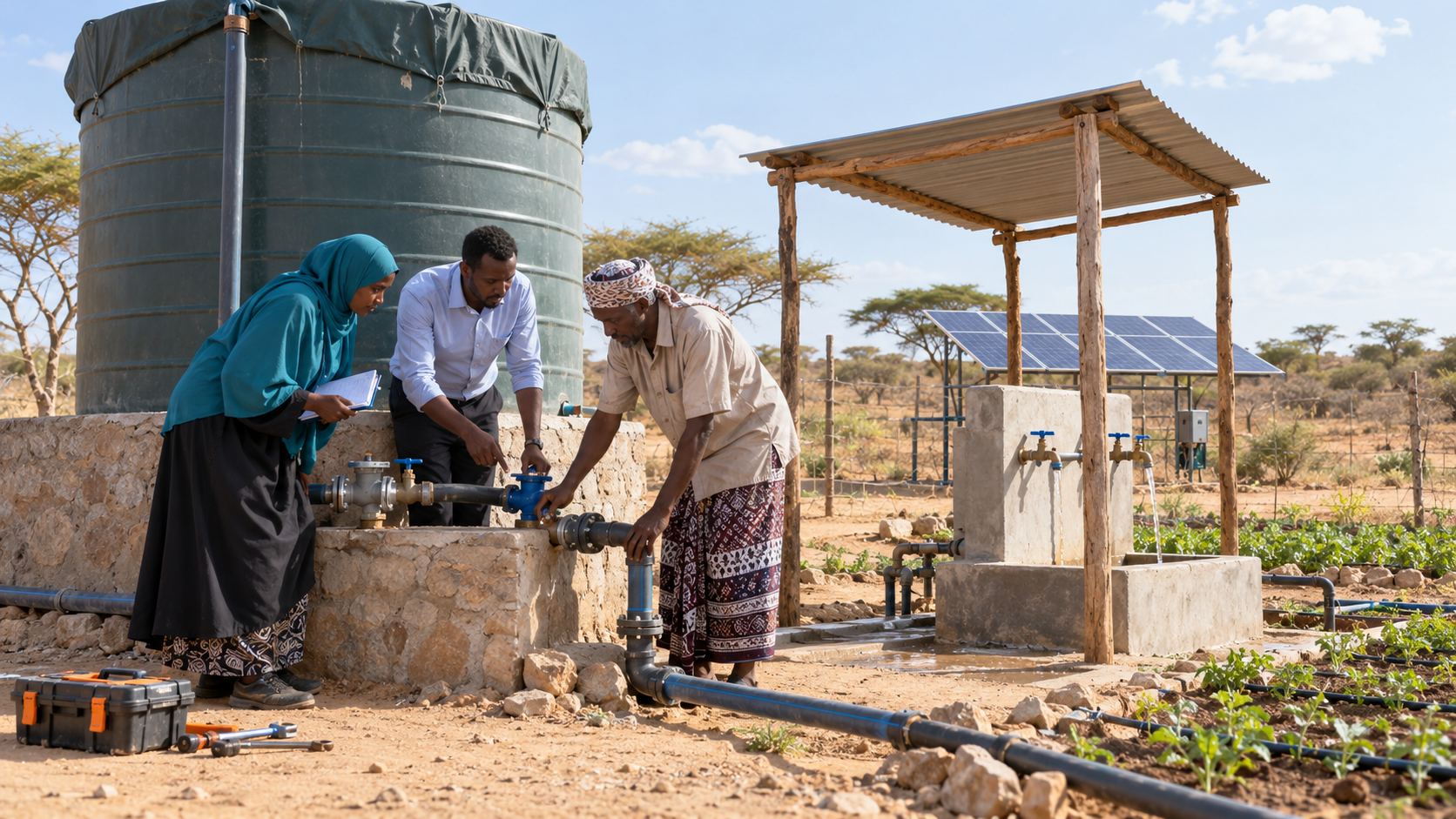
Somalia’s broader adaptation work offers potential connections for diaspora participation. UNDP reports support for water infrastructure, rangeland rehabilitation, alternative livelihoods, and university training in environmental studies and water management.
These are examples of government and partner programming. DCI proposes connecting diaspora expertise to such locally led work through defined partnerships.
Potential contributions include water engineers supporting locally appropriate storage systems, agronomists advising on production under changing rainfall, veterinarians strengthening animal health services, and researchers working with Somali universities. Each partnership should include local training, maintenance responsibilities, and monitoring.
From Policy Intent to Delivery
Somalia’s NDC 3.0, published in 2025, proposes establishing a Diaspora Climate Fund to support community adaptation and mitigation through diaspora remittances, philanthropy, and impact investment.
DCI interprets this proposal as a policy entry point. Effective delivery would require clear oversight, voluntary participation, transparent project selection, community representation, and public reporting.
Household remittances support family priorities. Dedicated adaptation contributions should use separate, voluntary channels. Any financing mechanism should explain how funds reach projects, who bears responsibility, and how communities report concerns.
Lessons for Diaspora Climate Readiness
DCI applies the five areas assessed through DCRI to identify practical readiness questions for Somalia. The following actions are proposals for strengthening engagement.
Climate strategy and policy. Define diaspora roles within national and local adaptation priorities. Set responsibilities, participation rules, and expected results before mobilizing contributions.
Climate expertise networks. Map interested diaspora professionals by specialization and availability. Match their skills with needs identified by local institutions, producer groups, and communities.
Dedicated coordination. Assign clear responsibility for connecting diaspora partners with climate authorities and local implementers. Provide a consistent route for project proposals, technical requests, and follow-up.
University and research collaboration. Develop joint research, remote teaching, short placements, and field monitoring with Somali institutions. Partnerships should strengthen domestic teaching and research capacity.
Documented climate initiatives. Support projects with defined climate risks, local ownership, maintenance plans, and published results. Track whether diaspora contributions add skills, resources, or connections beyond existing support.
Protecting Livelihoods and Measuring Results
DCI recommends designing participation around community needs. Project selection should include women, young people, displaced households, and groups without relatives abroad. Local representatives should help agree water access, land use, and dispute-resolution arrangements before approval.
Environmental assessment should guide agricultural expansion and water infrastructure. Project teams should assess groundwater availability, grazing needs, operating costs, and maintenance before selecting equipment or production models.
Results should cover reliable water access through dry seasons, infrastructure performance, livestock and crop losses, and income stability following climate shocks. Training counts and money raised describe activity. Resilience requires evidence of sustained benefits.
Why This Case Matters
Somalia illustrates the importance of linking diaspora engagement with livelihood protection and domestic capability.
For countries facing repeated climate shocks, diaspora readiness means building trusted institutions, technical partnerships, and participation routes around local priorities. Diaspora contributions should strengthen local capability and complement public services, humanitarian assistance, and international climate finance.
Explore DCI’s Climate Work
Explore the Diaspora Climate Readiness Index
Sources and Further Reading
CGIAR. How Somalia’s Diaspora Is Strengthening Climate and Conflict Resilience, May 2026.
United Nations Development Programme, Somalia. Facing Hunger: Climate Resilience, Water Management, and Livelihood Support, 2022.
Federal Republic of Somalia. Nationally Determined Contribution 3.0, 2025.