
Lessons for the Diaspora Climate Readiness Index (DCRI)
Diaspora climate engagement depends on institutions and participation routes linking overseas knowledge with local priorities. Mexico provides lessons through climate education, professional networks, and historical community financing arrangements.
For DCI, the central issue is how these connections develop into sustained local capability, accountable projects, and measurable climate results.
Diaspora Knowledge for Citizen Climate Action
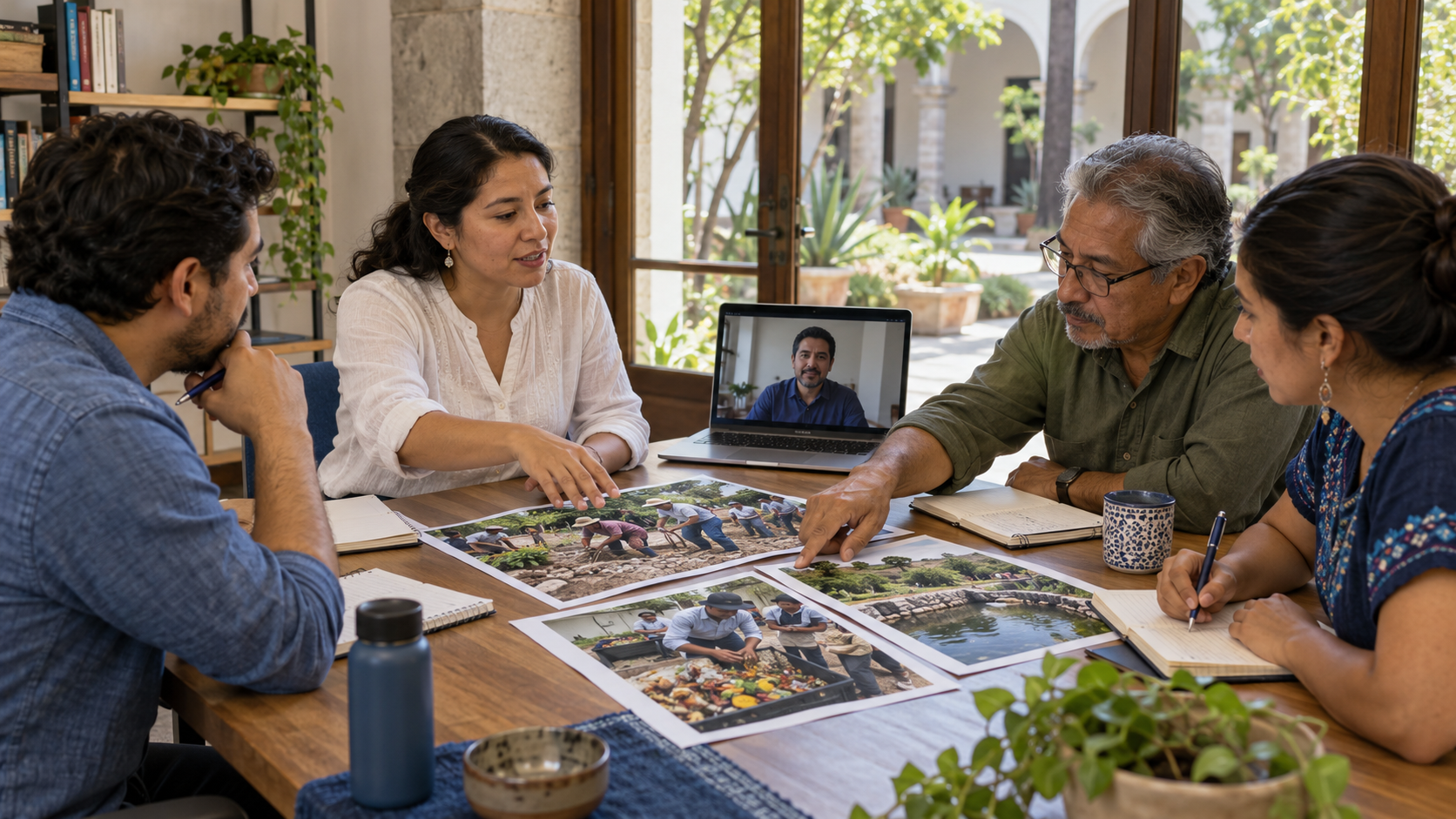
In 2022–2023, the EU Global Diaspora Facility (EUDiF) supported Red Global MX-UK, the UK chapter of a Mexican professional diaspora network, to strengthen knowledge exchange with partners in Mexico.
The initiative combined network development, consultation with diaspora academics, and collaborative workshops. Participants developed a citizen toolkit on climate action and the circular economy, launched in Mexico in September 2023.
The toolkit presents 30 personal actions, organized around reducing food waste, extending the useful life of everyday objects, and supporting circular practices.
These are documented outputs of knowledge transfer and education. They do not establish measured reductions in national emissions or climate vulnerability.
Turning Expertise into Usable Resources
DCI interprets this experience as evidence of the organizational work needed for diaspora engagement. Relevant expertise needs a coordinating network, a defined audience, local partners, and an accessible format.
For future initiatives, DCI recommends involving local users in selecting topics, testing materials, and planning delivery. Universities, community organizations, and municipal teams should help determine whether resources address practical needs.
Community Financing and the Historical 3×1 Model
Mexico’s historical 3×1 Program for Migrants combined contributions from migrant hometown associations with funding from municipal, state, and federal governments for community infrastructure and productive projects.
Research on the program also identified political conditions affecting project provision, illustrating the importance of institutional coordination.
This was a community development financing mechanism. Assessing climate benefits requires project-specific evidence on environmental performance and reduced vulnerability. A water or infrastructure project should undergo climate risk assessment before receiving an adaptation label.
Connecting Climate Action with Local Vulnerability
An IOM assessment of Mexico highlights how poverty and inequality affect communities’ ability to adapt. The assessment also emphasizes rights, gender inclusion, and the needs of people facing environmental risks who lack the resources to move.
For DCI, this supports a practical design principle: diaspora participation should follow locally identified needs. Community selection should include vulnerable groups and places without established overseas fundraising networks.
Lessons for Diaspora Climate Readiness
Mexico’s experience informs questions across DCRI’s five readiness areas.
Climate strategy and policy. Connect diaspora contributions with public climate priorities and local implementation plans. Define the intended contribution to education, emissions reduction, or adaptation.
Climate expertise networks. Maintain information on interested diaspora researchers, engineers, educators, and practitioners. Match expertise with specific requests from domestic partners.
Dedicated coordination. Assign clear responsibility for managing participation, reviewing proposals, and maintaining communication between overseas contributors and local institutions.
University and research collaboration. Develop relationships supporting joint research, teaching, technical advice, and local professional development. Establish responsibilities for maintaining and updating shared materials.
Documented climate initiatives. Record who participates, what resources reach communities, and what changes follow. Distinguish completed activities from independently assessed climate outcomes.
Practical Directions for Future Partnerships
Building on these lessons, DCI identifies several options for future collaboration.
Local organizations and diaspora specialists would work together on food-waste prevention, repair and reuse initiatives, and practical environmental education. Municipal partners should help assess delivery arrangements and continued operating costs.
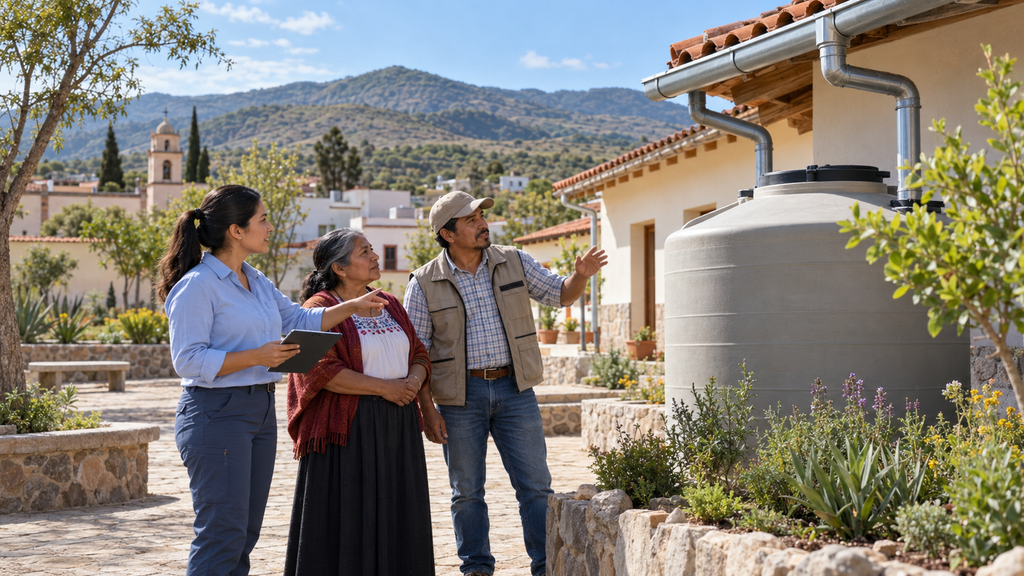
Separate adaptation partnerships would address locally assessed priorities such as water security, heat exposure, resilient livelihoods, or continuity of essential services. Each project should establish a baseline, identify responsible institutions, and provide a maintenance plan.
These options require local agreement, technical assessment, and resources before implementation.
Measuring What Changes
Education initiatives should track learning, continued use of materials, and adoption of practices. Circular-economy projects should measure changes such as avoided waste or longer product use, with transparent methods for any emissions estimates.
Adaptation projects should assess outcomes relevant to their purpose, including water reliability, service continuity, or livelihood stability during climate shocks.
Public reporting should explain spending, participation, operating performance, and the distribution of benefits.
Why This Case Matters
Mexico demonstrates the value of examining diaspora knowledge networks alongside community financing experience.
The readiness lesson is to build institutions connecting contributions with local capability. Overseas expertise and resources should complement public responsibilities while strengthening communities’ ability to sustain climate action.
Explore DCI’s Climate Work
Explore the Diaspora Climate Readiness Index
Sources and Further Reading
EU Global Diaspora Facility. The Co-Creation Journey Behind RGMX-UK’s Climate Action Toolkit, September 2023.
EU Global Diaspora Facility. Toolkit: List of Personal Actions for the Circular Economy, December 2023.
Government of Mexico. Programa 3×1 para Migrantes.
Meseguer, Covadonga, and Francisco Javier Aparicio. Migration and Distributive Politics: The Political Economy of Mexico’s 3×1 Program. Latin American Politics and Society, 54(4), 147–178, 2012.
International Organization for Migration. National Overview of Migration, Environment and Climate Change in Mexico, 2025. Spanish-language report.