
How the Philippines Connects Diaspora Scientists with Local Universities for Semiconductor Research
During a month at Central Mindanao University, Filipino materials scientist Dr. Janella Mae R. Salamania taught students and researchers how to study thin films, the layers of material used in semiconductor devices. She also helped the university establish research ties with Linköping University in Sweden and opened discussions with Uppsala University. Her assignment brought two distinct benefits to a regional Philippine university: practical instruction for its researchers and access to colleagues abroad working in the same field.
Salamania returned through the Philippines’ Balik Scientist Program, which connects Filipino scientists and engineers working abroad with institutions at home. Her experience illustrates a form of diaspora engagement with particular relevance for semiconductor research. A scientist who spends part of a career overseas brings both technical knowledge and an understanding of which laboratories, research groups and collaborators to approach when a local team needs help.
How the Philippines organizes scientific return
In 2018, the Philippines enacted the Balik Scientist Act, giving the programme a statutory basis under the Department of Science and Technology (DOST). A Philippine university, government agency or locally registered company serves as the host and undertakes research, technology or innovation activities with the scientist. This gives the overseas professional a counterpart with a reason to use the expertise and a place to carry out the work.
The law allows assignments of different lengths. A short engagement ranges from 15 days to six months. Medium engagements last more than six months and up to one year. Long engagements extend beyond one year and up to three years per award, with provision for renewal. A scientist with an established laboratory or teaching position abroad therefore has a route to contribute during a shorter visit. For a subsequent visit, DOST asks the host institution to explain why another engagement is needed.
Why thin-film research matters for semiconductors
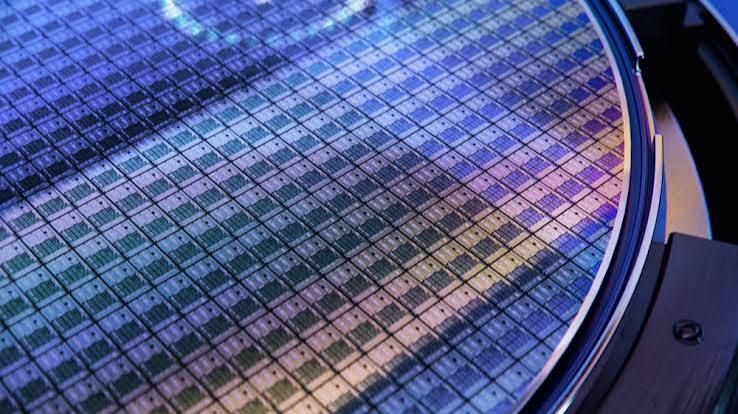
A semiconductor device depends on layers of material with different jobs. Some layers conduct electricity. Others insulate neighbouring components. Researchers studying these films need to understand how a layer forms, how to measure its properties and how to tell whether a change in the process affects performance. For a country with an established electronics industry, these are practical research questions for universities as well as manufacturers. DOST identifies domestic research capacity and the production of high-quality thin films at a competitive cost as challenges for the Philippines.
At Central Mindanao University, Salamania paired lectures with hands-on training. Students and researchers had the opportunity to work through thin-film concepts with a specialist in their own institution. The location matters. A regional university hosted the assignment, giving its own research community access to expertise relevant to a national industrial priority. DOST also lists integrated circuit development and engineering among the semiconductor skills sought through the programme.
From an individual visit to a university partnership
Salamania’s contribution extended beyond what she taught during the month. DOST reports an established research connection with Linköping University and initial discussions with Uppsala University. The distinction matters when assessing results. Central Mindanao University gained a research relationship with one institution and an opportunity to explore collaboration with another.
For a host university, the value of an overseas relationship becomes clearer when the next research question arises. A faculty member might need a colleague to review an experimental method. A graduate student might need access to an instrument unavailable locally. A laboratory might seek a partner to investigate why a film performs differently across samples. These are examples of work such a relationship might support. For the Central Mindanao case, the documented outcomes are the training, the Linköping connection and the opening discussions with Uppsala.
What the Philippines contributes to the Semiconductor Diaspora Readiness Index
The Philippines is one of ten countries in DCI’s Semiconductor Diaspora Readiness Index pilot. The Balik Scientist case helps explain three of the index categories. Under Institutions and Participation, a national programme and a named host gave the scientist a defined role. Under Workforce and Knowledge Absorption, students and researchers received practical instruction. Under Technical Access and Collaboration, the host university gained contacts relevant to its research. Each category captures a different part of the same assignment.
For other countries, the most useful feature to adapt is the host institution’s role. A university planning a diaspora assignment should identify the research problem, the local researchers who will carry the work forward and the equipment they will need after the visit. A follow-up assessment should then examine what those researchers did next. Did they repeat a method independently, incorporate the training into a course or undertake an experiment with an overseas partner?
Those questions give governments and universities a way to judge what scientific return achieves. In the Philippine case, the record begins with a specific discipline, a month of work at a regional university and two international relationships at different stages. The longer-term measure is what Central Mindanao’s researchers go on to teach, investigate and develop through those connections.
Sources and related research
Senate of the Philippines | Republic Act No. 11035, the Balik Scientist Act
Department of Science and Technology | Balik Scientist Program application and host requirements
Balik Scientist Program | Semiconductor and electronics research priorities
Diaspora Country Index | Semiconductor Diaspora Readiness Index